How much does it cost to climb Everest in 2026?
By Richard Jasinski·Updated 26 September 2026
A guided Everest expedition costs between roughly $45,000 and $415,000 per climber in 2026, and the only fixed number in that range is the $15,000 permit. Nepal raised the spring royalty from $11,000 on 1 September 2025, the first increase since 2015. Several rules reported as new, among them a non-refundable garbage fee, are still proposals in a bill that has not passed. Everything else is a market range that moves with the tier you buy. The builder below starts from Nepal’s published fees and adds the operator bands from Alan Arnette’s 2026 survey, which is the closest thing this mountain has to an audited price list.
up from $11,000
four tiers
still refundable
spring and autumn
Build your expedition number
Excludes the $4,000 garbage deposit, which is paid per team and refunded when the team’s waste comes down, and excludes flights to Kathmandu and tips. The permit figures are Nepal’s published fees; the operator bands are Alan Arnette’s 2026 survey; the add-ons marked as estimates are market ranges, not published prices.
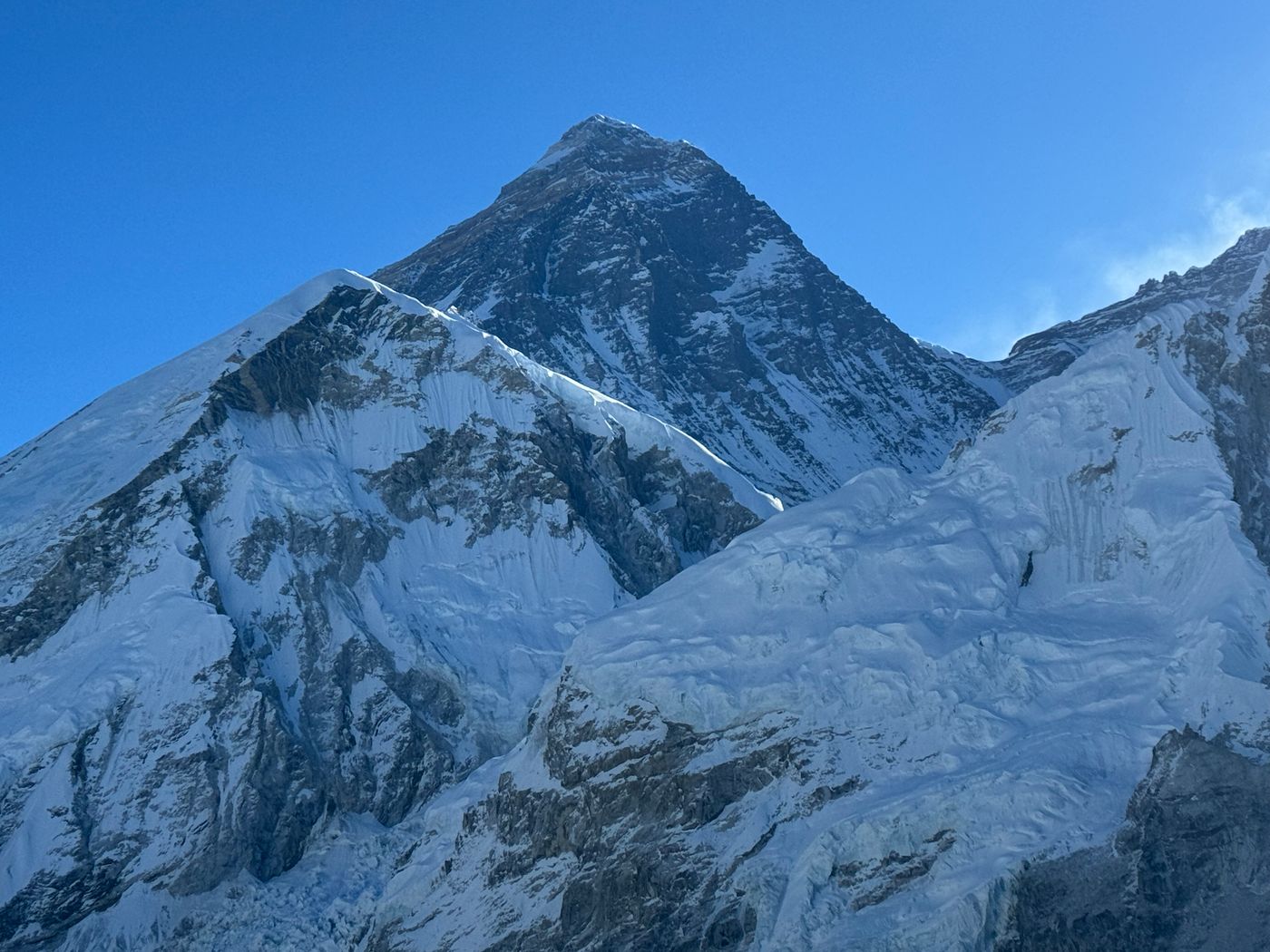
The permit, and what else changed
Nepal raised the spring royalty from $11,000 to $15,000 per foreign climber on 1 September 2025, the first rise since 2015. Autumn went from $5,500 to $7,500 and winter and monsoon from $2,750 to $3,750. Nepali climbers pay Rs150,000 in spring, doubled from Rs75,000.
Two other rules are in force for 2026, and most coverage skips them.
Guide ratios are fixed in law. Above 8,000 metres, every two foreign climbers must hire at least one guide, in force since 1 September 2025. The same amended regulation raised the insurance cover for high-altitude guides to Rs2 million, the Kathmandu Post reported.
Every climber must carry down two kilograms of waste from above Camp 2, not counting oxygen bottles or human waste, under a Sagarmatha Pollution Control Committee rule that took effect in spring 2026. A monitoring team at Camp 2 checks it, and human waste must go in the committee’s own bags, The Tourism Times reported in March.
Four more are widely reported as law and are not. All sit in Nepal’s Tourism Bill, the same unpassed bill as the 7,000-metre rule below, according to the Kathmandu Post’s reporting on the bill and Alan Arnette’s 2026 survey.
The garbage deposit is still a deposit. The $4,000 per team comes back when the team’s waste comes down. The bill would replace it with a non-refundable fee of $4,000 per climber.
Dead-body management insurance would be added to the existing accident, health and rescue cover. Retrieving a body from high on the mountain costs between $20,000 and $200,000, which is why it has been proposed.
A medical certificate from a government-approved institution, issued within the previous month, would be required.
Sirdars and high-altitude guides would have to be Nepali citizens.
The rule that has not passed, and why it matters
The requirement sits in Nepal’s Tourism Bill 2081 and has not passed. The upper house approved it. On 8 July 2026 the House of Representatives sent it back to the International Relations and Tourism Committee for clause-by-clause discussion, after which it needs a further House vote and then the president’s signature. Alan Arnette, who has tracked the bill through every stage, summarised the position in July 2026 as another step forward but not passed. By 22 July, 58 lawmakers had filed 263 amendments, several tougher than the original: one 7,000-metre and two 8,000-metre summits in Nepal, or two 6,000-metre peaks and one 7,000-metre peak, the Kathmandu Post reported.
Nepal’s tourism ministry had aimed the rule at the spring 2027 season. Operators now say that date has gone: Daniel Mazur of SummitClimb calls it off the table for spring 2027, and Mingma Gyalje Sherpa of Imagine Nepal expects it to apply from 2028 at the earliest, Abenteuer Berg reported in August. There is also unresolved argument about whether it would count Nepali peaks only or 7,000-metre summits anywhere. That is not a detail: it decides whether a Lenin Peak or a Muztagh Ata counts.
The practical point: a warm-up expedition on something like Ama Dablam is excellent preparation and most reputable operators will want to see comparable experience before they take your money. Budget it for that reason. Do not budget it because a government gate exists, because as of today it does not.
The full cost breakdown
Every Everest budget is the same nine lines in different proportions. Three of them are fixed by Nepal and the rest move with your operator.
| Line item | Typical 2026 cost | Notes |
|---|---|---|
| Climbing permit, spring | $15,000 | Fixed by Nepal. Autumn $7,500; winter and monsoon $3,750. |
| Operator fee | $30,000–$399,000 | The biggest variable by far, see the four tiers below. |
| Garbage deposit | $4,000 per team | Refundable when the team’s waste comes down. The unpassed Tourism Bill would make it a non-refundable $4,000 per climber. |
| Sherpa support and summit bonuses | $5,000–$15,000 | Often bundled into the operator fee. A 1:1 personal Sherpa costs more. Market estimate. |
| Supplemental oxygen | $3,000–$6,000 | Bottles, mask, regulator. Premium teams carry more. Market estimate. |
| Personal kit | $8,000–$15,000 | If bought new. Market estimate. |
| Insurance and rescue membership | $65–$15,000 | From an American Alpine Club membership to full expedition cover. |
| Flights, Kathmandu hotels, visas | $2,000–$6,000 | Long-haul into Kathmandu plus buffer nights at both ends. Market estimate. |
| Tips, comms, contingency | $2,000–$5,000 | Staff tips are customary and expected. Market estimate. |
Why one climb costs $45,000 and another $300,000
The mountain is the same. The margin for error is not, the money buys oxygen, ratios, forecasting and speed. These four bands are Alan Arnette’s 2026 figures rather than ours. Which companies sell each band, and at what price, is set out in our Everest expedition operators comparison; operators who guide all seven summits are scored in the Seven Summits operator index.
Sherpa-supported: $30,000 to $55,000
Logistics, permits, fixed ropes and Sherpa support, but you climb without a dedicated guide alongside you. The cheapest legitimate way onto the mountain.
Sherpa-guided: $45,250 to $58,000
A Sherpa guide climbing with you rather than supporting from the team. The band most permits are sold in.
Fully guided, international: $65,000 to $125,000
Western or international guides alongside senior Sherpa, richer oxygen flow, better forecasting and stronger base-camp medical cover. The extra money buys decision-making and redundancy.
Ultra-premium: $230,000 to $399,000
Hypoxic pre-acclimatisation at home, compressed expedition lengths, 1:1 ratios, private cooks and comms. A different product, not a better-appointed version of the same one.
A note on the Summit+ permit
There is no Summit+ permit. A priority tier carrying a $12,000 surcharge on top of the $15,000 royalty was widely repeated in 2026. The claim traces to a Climbing magazine article dated 1 April 2026 that was written as an April Fool’s joke. Nepal’s tourism ministry never announced such a tier and no operator sells one; summit-day traffic is managed through permit numbers, weather windows and rope-fixing dates, not price. An earlier version of this page listed Summit+ as reported but unconfirmed, and our July write-up of the story repeated it; both now carry the correction.
Everest for less: the honest alternatives
If the number above ended the conversation, three routes still put you in front of the mountain.
The Base Camp trek costs roughly $1,200 to $5,000 all-in and carries no climbing royalty at all, none of the 2025-26 reforms touch trekkers. Budget about $45 for national park and rural municipality fees. Compare guided Everest-region treks and departure dates across operators before booking direct with one.
A helicopter to Kala Patthar puts you at 5,600 metres with a view of the summit pyramid for roughly $1,100 to $1,500 a seat, usually as a Kathmandu day trip with a landing at Everest View for breakfast.
A different 8,000-metre peak. Nepal has waived permit fees on 97 peaks in Karnali and Sudurpaschim through 2027, a deliberate pressure valve away from the Everest corridor. Manaslu remains the conventional stepping stone and costs a fraction of Everest; Cho Oyu, normally climbed from Tibet, is shut with the rest of the Tibetan side.
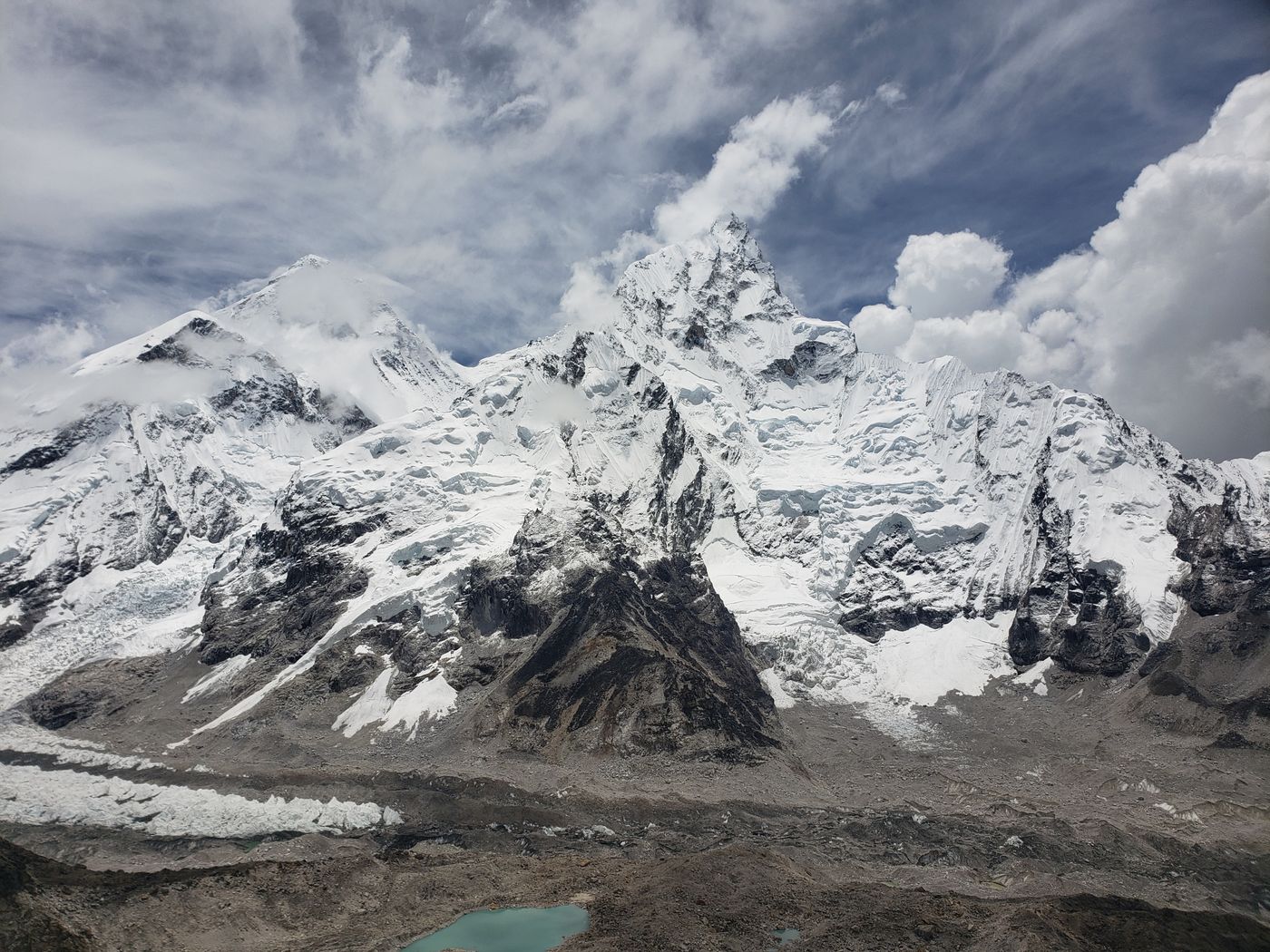
Frequently asked questions
How much does it cost to climb Everest in 2026?
Between roughly $45,000 and $415,000 per climber all-in, depending entirely on which tier you buy. Alan Arnette's 2026 survey puts operator fees at $30,000 to $55,000 for Sherpa-supported climbs, $45,250 to $58,000 Sherpa-guided, $65,000 to $125,000 and up for fully guided international expeditions, and $230,000 to $399,000 at the ultra-premium end. On top of the operator fee sits the $15,000 spring permit, kit, insurance and flights, plus a $4,000 garbage deposit per team that is refunded when the waste comes down. The permit is the only figure that is fixed; everything else is a market range.
How much is the Everest climbing permit in 2026?
$15,000 per foreign climber for the spring season, raised from $11,000 on 1 September 2025, the first increase since 2015. Autumn permits are $7,500, up from $5,500, and winter and monsoon permits are $3,750, up from $2,750. Nepali climbers pay Rs150,000 in spring, doubled from Rs75,000. Separately, the $4,000 garbage deposit per team is still refundable; the Tourism Bill that would turn it into a non-refundable fee per climber has not passed.
Do you need to have climbed a 7,000-metre peak before Everest?
Not yet, despite what a great deal of coverage says. The requirement sits in Nepal's Tourism Bill 2081 and has not passed into law. The upper house approved it, but on 8 July 2026 the House of Representatives sent it back to the International Relations and Tourism Committee for clause-by-clause discussion, and it still needs a further House vote and the president's signature. Nepal's tourism ministry had aimed the rule at the spring 2027 season, but with 263 amendments under committee review, operators now expect it to apply from 2028 at the earliest, and there is active debate about whether it would count Nepali peaks only or summits anywhere. If you are budgeting a warm-up expedition, budget it because it is good preparation, not because it is currently required.
Is the Tibet side of Everest open in 2026?
No. The north side stayed closed for both the spring and autumn 2026 seasons. The China Tibet Mountaineering Association did not open its standard application process and has given no official explanation; ExplorersWeb links the closure to the backlash over a fireworks display near Shigatse in September 2025. Outfitters expect it to reopen for spring 2027, which has not been confirmed. The practical consequence in spring 2026 was that roughly 125 climbers who would have gone north competed for the south side instead, which did nothing helpful to availability or to the summit-day queue.
What is the Everest Summit+ permit?
There is no Summit+ permit. The $12,000 priority-access tier reported in 2026 traces to a Climbing magazine article dated 1 April 2026 that was written as an April Fool's joke. Nepal's tourism ministry never announced it and no operator sells it. Summit-day traffic on the Nepal side is managed through permit numbers, weather windows and rope-fixing dates, not price, and the spring royalty remains $15,000.
What guide and insurance rules apply in 2026?
Above 8,000 metres, every two foreign climbers must hire at least one guide, in force since 1 September 2025, when the insurance cover owed to high-altitude guides also rose to Rs2 million. Three further rules are often reported as in force but sit in Nepal's Tourism Bill, which has not passed: Nepali-only sirdars and high-altitude guides, dead-body management insurance on top of accident and rescue cover (retrieving a body from high on the mountain costs $20,000 to $200,000), and a medical certificate from a government-approved institution issued within the previous month.
What is the new waste rule on Everest?
Every climber must carry down two kilograms of waste from above Camp 2, excluding oxygen bottles and human waste, under a Sagarmatha Pollution Control Committee rule that took effect in spring 2026 and is checked by a monitoring team at Camp 2. Human waste must go in bags supplied by the committee rather than a personal system. The rule sits alongside the refundable $4,000 garbage deposit rather than replacing it.
Is Everest Base Camp affected by the permit increase?
No. The royalty applies to climbers, not trekkers. Trekking to Base Camp still costs roughly $1,200 to $5,000 all-in depending on how you do it, plus national park and rural municipality fees of about $45. None of the 2025-26 climbing rules touch the trek: not the permit rise, the guide ratio or the waste rule.
The Lukla problem is a cost line, not an inconvenience
Lukla closes on weather with no notice, and a scheduled-flight delay at either end of an expedition burns acclimatisation days you have already paid for at expedition rates. Teams increasingly price a helicopter into Lukla or Base Camp as insurance on the schedule rather than as luxury, and on the way out, when the weather window has gone and the season is over, it is the difference between leaving and waiting.